 Clyep
12 episodes, about 1 hr 15 min 2 views across the series
Topics: Retrieval and knowledge
Learn Knowledge Graphs
Created by Abhyuday DesaiUpdated , episode 4
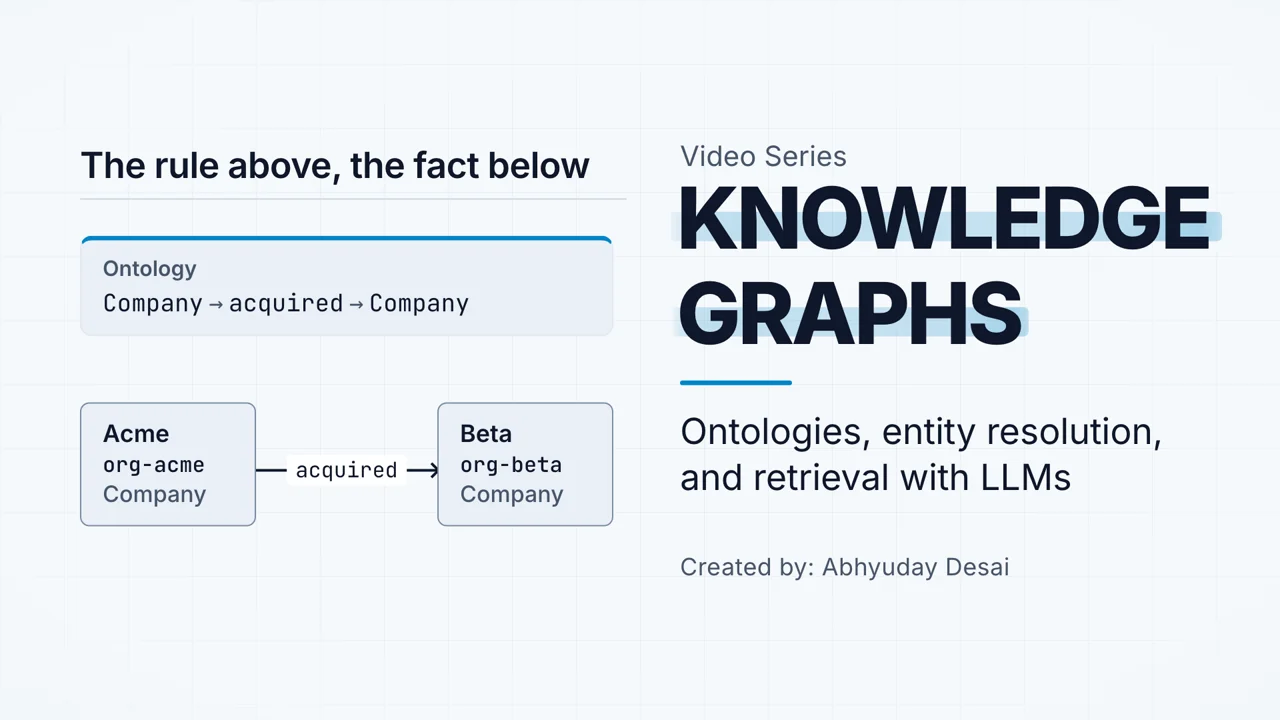
Knowledge graphs from the ground up: what an ontology declares, how a system decides that two records are one thing, and when a graph beats vector search in front of an LLM.
Start with episode 1Part oneModeling: ontologies and knowledge graphs
- 01 Watch
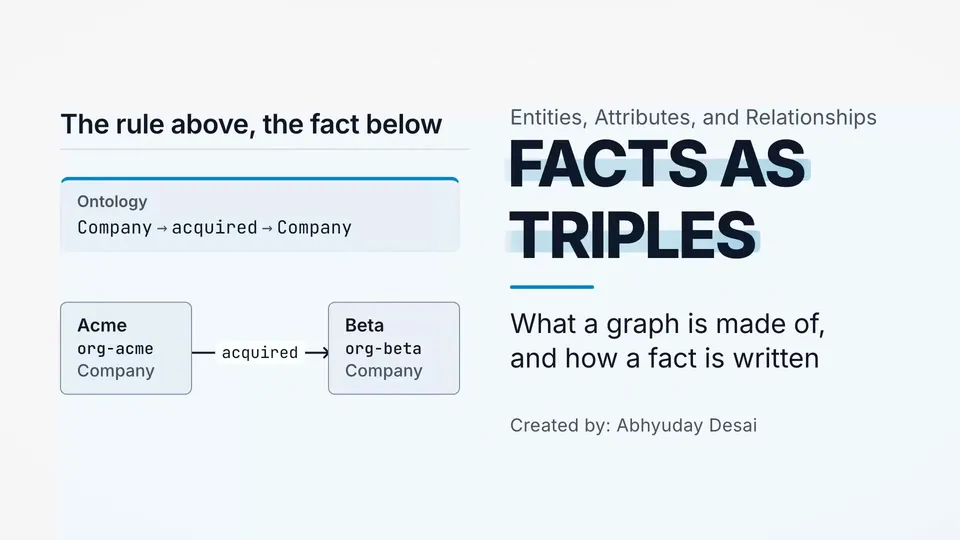
Entities, Attributes, and Relationships
What a knowledge graph is made of: entities with identities, attributes as values, relationships as typed edges, and a fact written down as a triple.
- 02 Watch
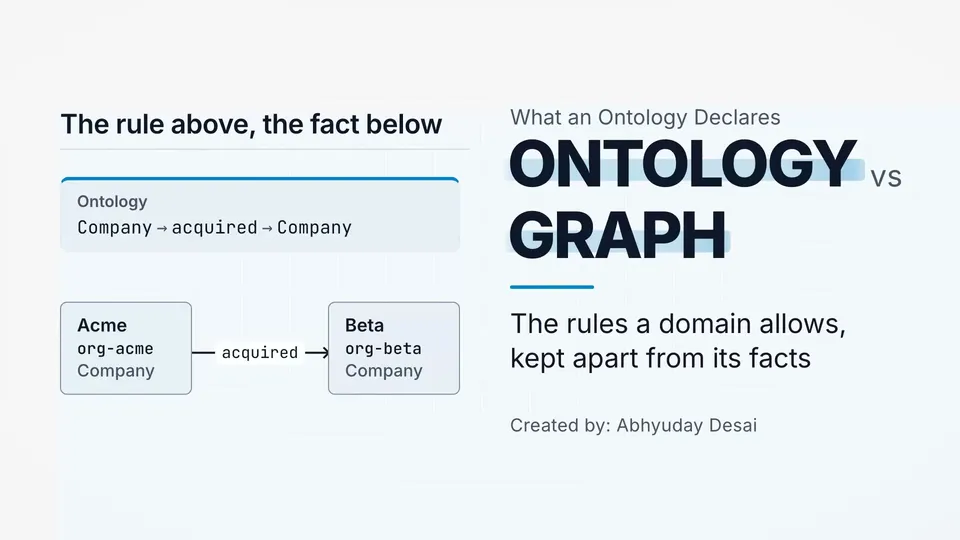
What an Ontology Declares
The ontology is the rulebook: types, which relationships are allowed between them, and how many values a thing may carry. The knowledge graph is what has been recorded under those rules.
- 03 Watch
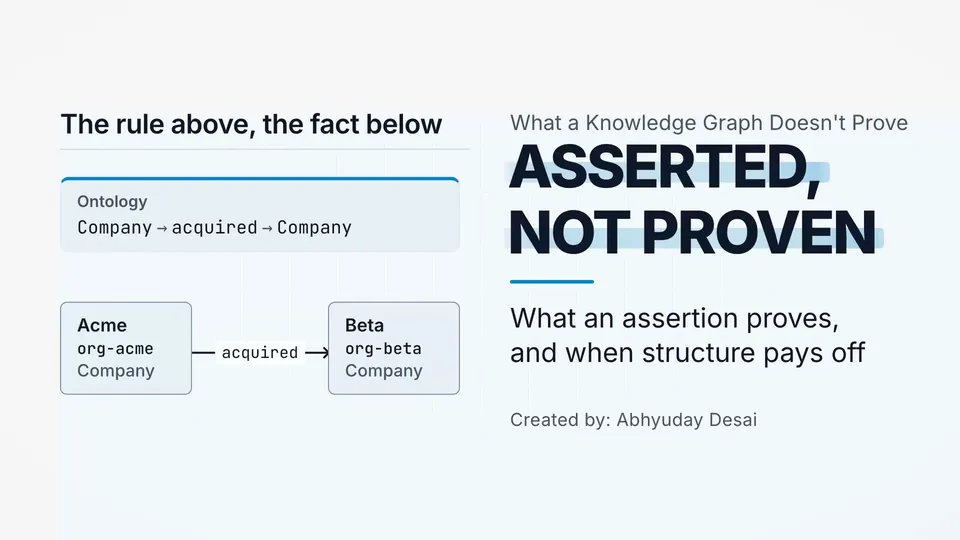
What a Knowledge Graph Doesn't Prove
An edge in a knowledge graph is a recorded claim, not a verified one. What assertions establish, where the semantic layer fits, and the three conditions that make explicit structure worth maintaining.
Part twoIdentity: entity resolution
- 04 Watch
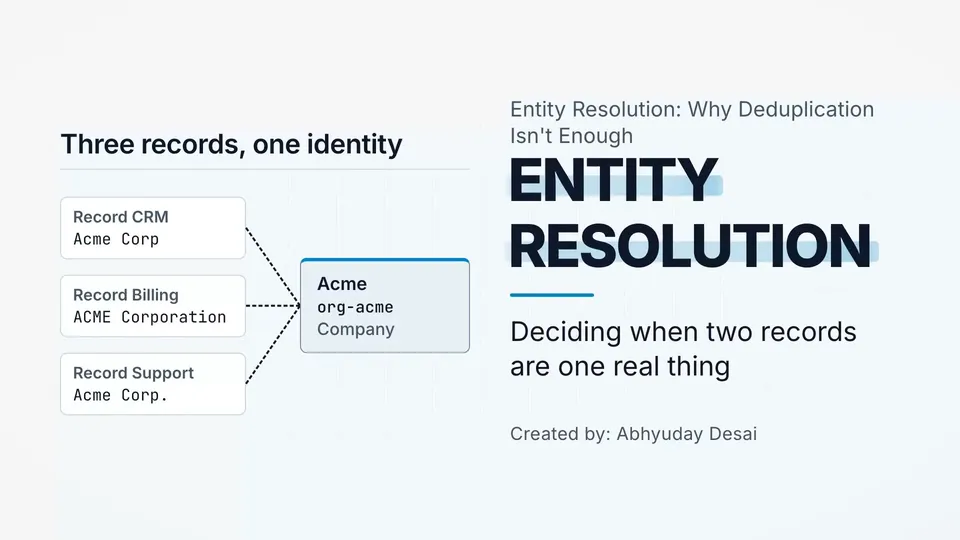
Entity Resolution: Why Deduplication Isn't Enough
Three systems hold three spellings of one company. Why distinct-by-string can't fix that, the two opposite ways identity goes wrong, and the two cheapest steps of a real resolution pipeline.
- 05 Watch
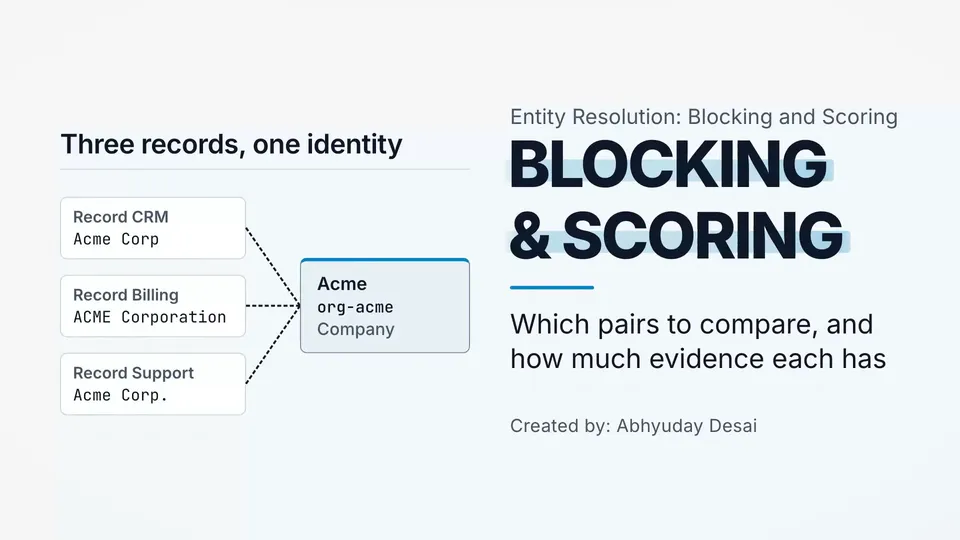
Entity Resolution: Blocking and Scoring
Blocking cuts comparisons to plausible pairs; scoring turns each pair's evidence into one number. Why one pass misses matches, why missing and conflicting evidence differ, and where embeddings fit.
- 06 Watch
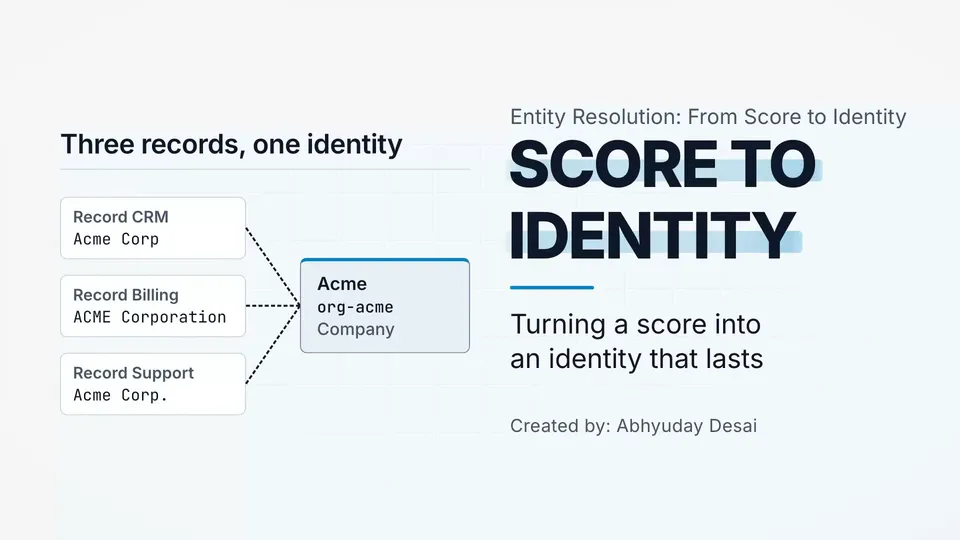
Entity Resolution: From Score to Identity
A score becomes a decision at two cut points, and a decision becomes an identity through review, survivorship, provenance and reversible merges.
- 07 Watch
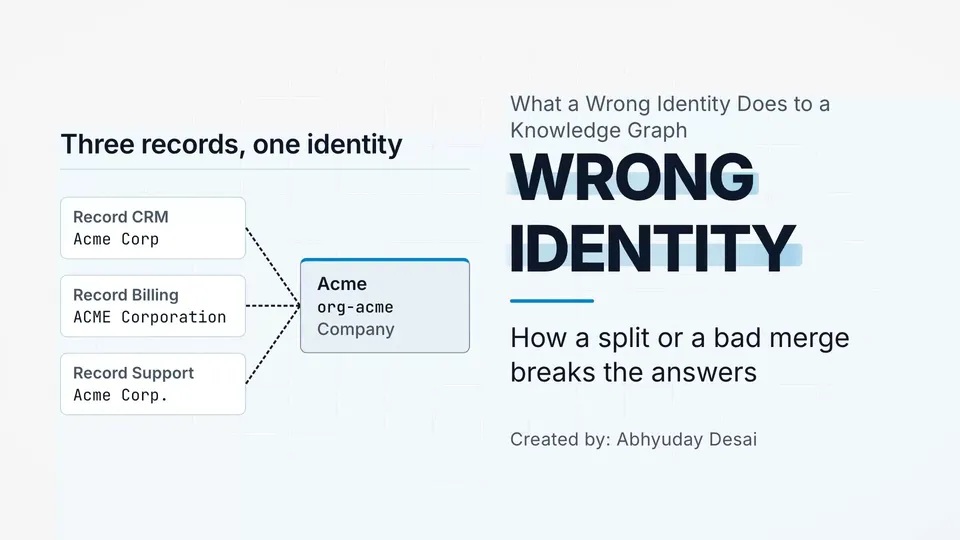
What a Wrong Identity Does to a Knowledge Graph
Identity failures seen from inside the graph: a split identity breaks a traversal, resolving it reconnects the path without adding a fact, and an incorrect merge produces a confidently wrong answer.
Part threeRetrieval: graphs, vectors and LLMs
- 08 Watch
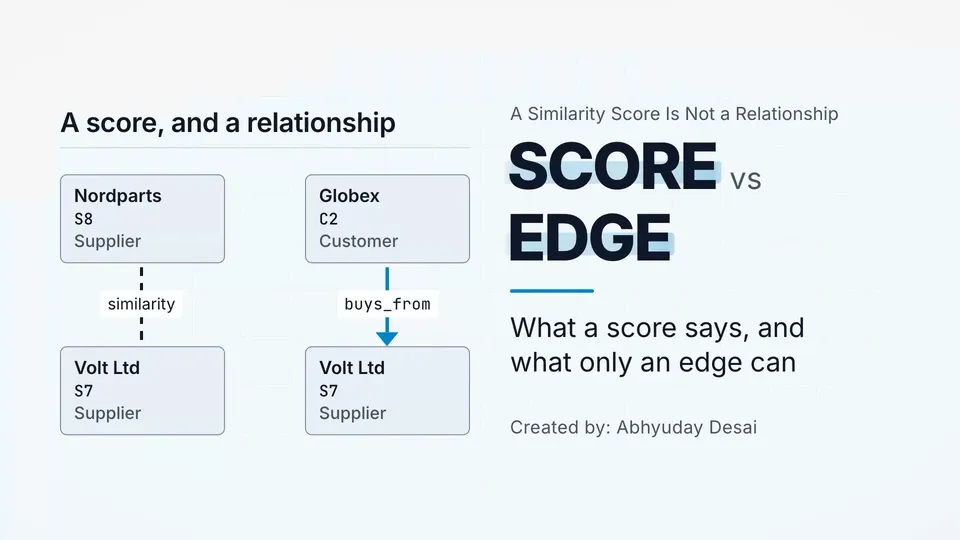
A Similarity Score Is Not a Relationship
A similarity score says two texts are close. A graph edge says what connects two entities and in which direction. The difference, and a two-hop question answered by joining recorded relationships.
- 09 Watch
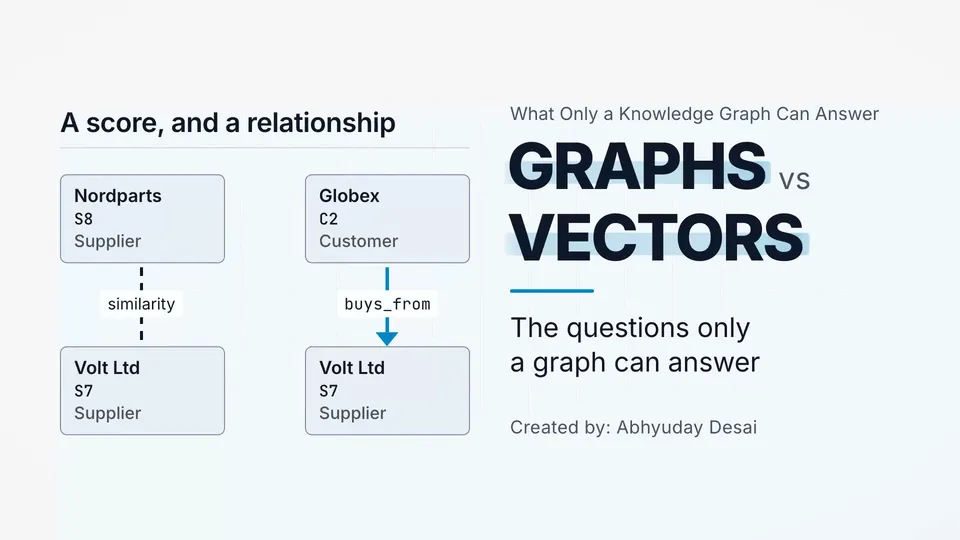
What Only a Knowledge Graph Can Answer
The questions only structure answers: an absent relationship, a complete set rather than a top-k, a count of connections. And the honest case where a sentence nobody modeled beats the graph.
- 10 Watch
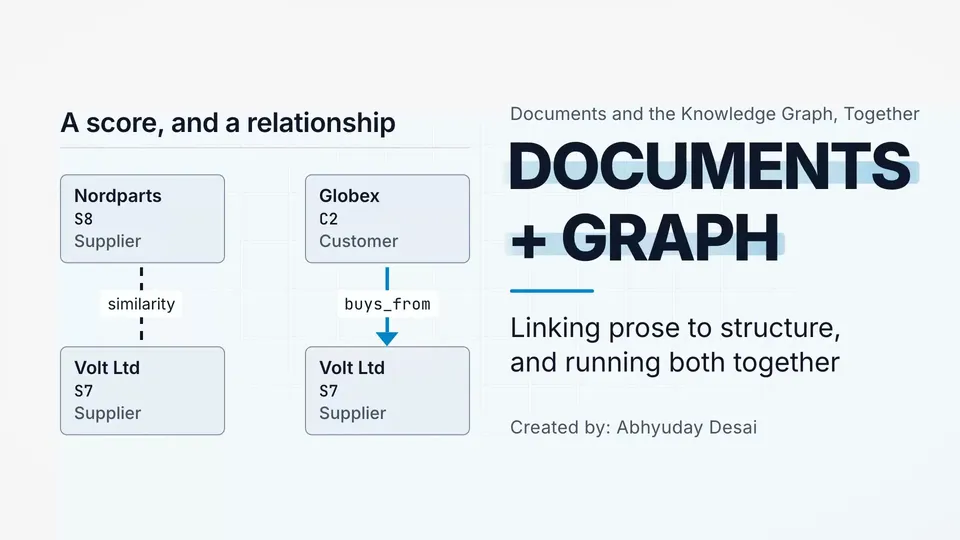
Documents and the Knowledge Graph, Together
Two links join prose to a graph: extraction and attachment. Then the two ways a vector database and a knowledge graph run together: similarity finds the entry point, structure bounds the search.
- 11 Watch
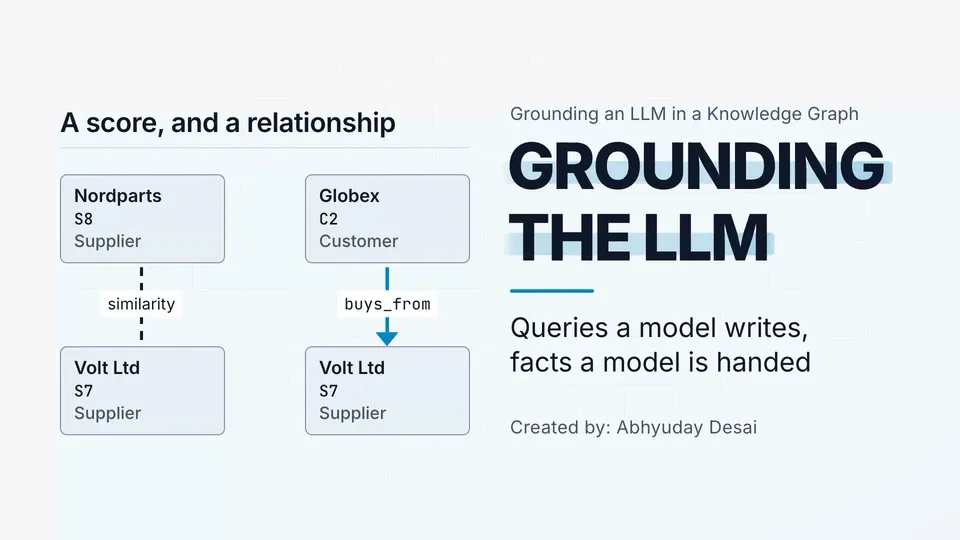
Grounding an LLM in a Knowledge Graph
Two ways to put a language model on a knowledge graph: let it write a query from the schema, or hand it the facts with identifiers intact. And three things grounding does not guarantee.
- 12 Watch
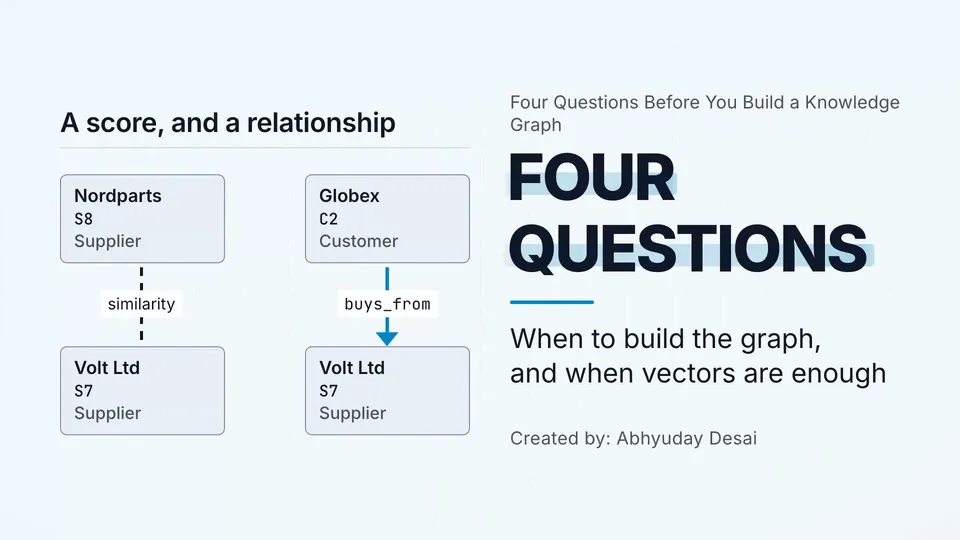
Four Questions Before You Build a Knowledge Graph
What the heaviest form of graph structure costs to keep current, and four questions that settle the choice between a knowledge graph and a vector database. The series close.